Envision Beyond Journal
The Future of Business: Climate Week New York 2023 Special Edition
By Emek Yeşilyurt, Jose Carvalho & Stefan Schoepfel
Originally published
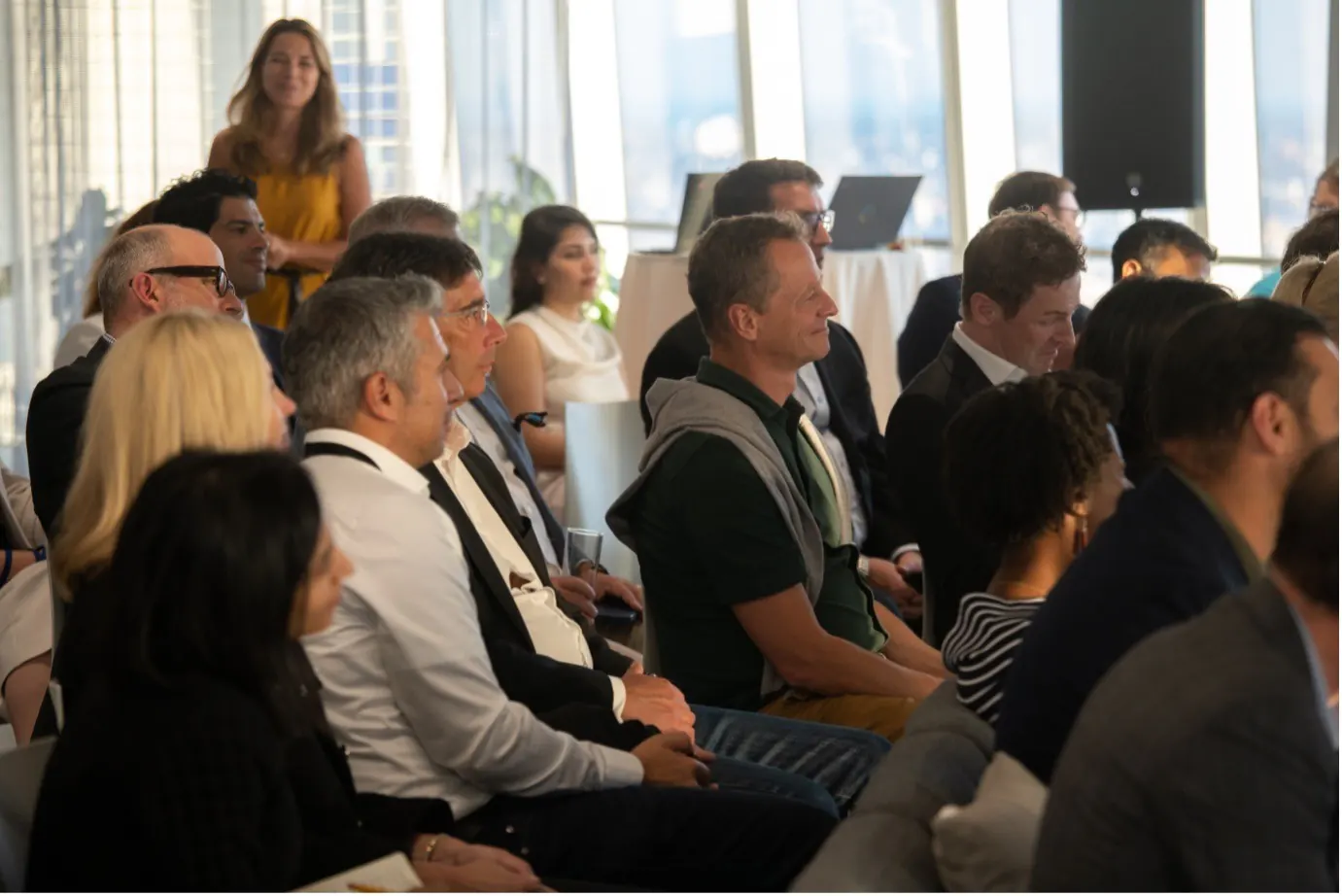
This issue is a special edition to reflect on the #ClimateWeek New York 2023 and is about the Future of Business. During the Climate Week, the Intelligent Enterprise Institute hosted an event with partners to express our shared commitment to creating a purposeful, inclusive, and sustainable future. Read our reflection in this special edition.
We all acknowledge the rapid changes in various aspects of life and business. Many of these changes are of an unprecedented magnitude and they are interconnected – this includes technological advancements, geopolitical dynamics, and climate change. In the technology area, AI is the most disruptive power.
However, our actions cannot be entirely driven by those changes. Technology is a powerful tool shaping the future, but it is just one part of the equation. It’s time to look at business from a different lens and envision beyond to see what challenges and opportunities the future may bring. We need to advocate for a proactive approach that will help us to turn challenges into advantages. To be more in control of our destiny and transformation, we need to develop a joint vision for a future that is purposeful, inclusive, and sustainable. We need to enable collective action by bringing together perspectives from business, arts and culture, policy, and technology. Holistic thinking is important, and this needs to take human values and ethics into account.
You will find this reflected in the agenda of the Future of Business: Climate Week New York 2023 Special Edition with contributions from our customers, the World Economic Forum, the UN, McKinsey, and many other thought leaders from in- and outside of SAP.
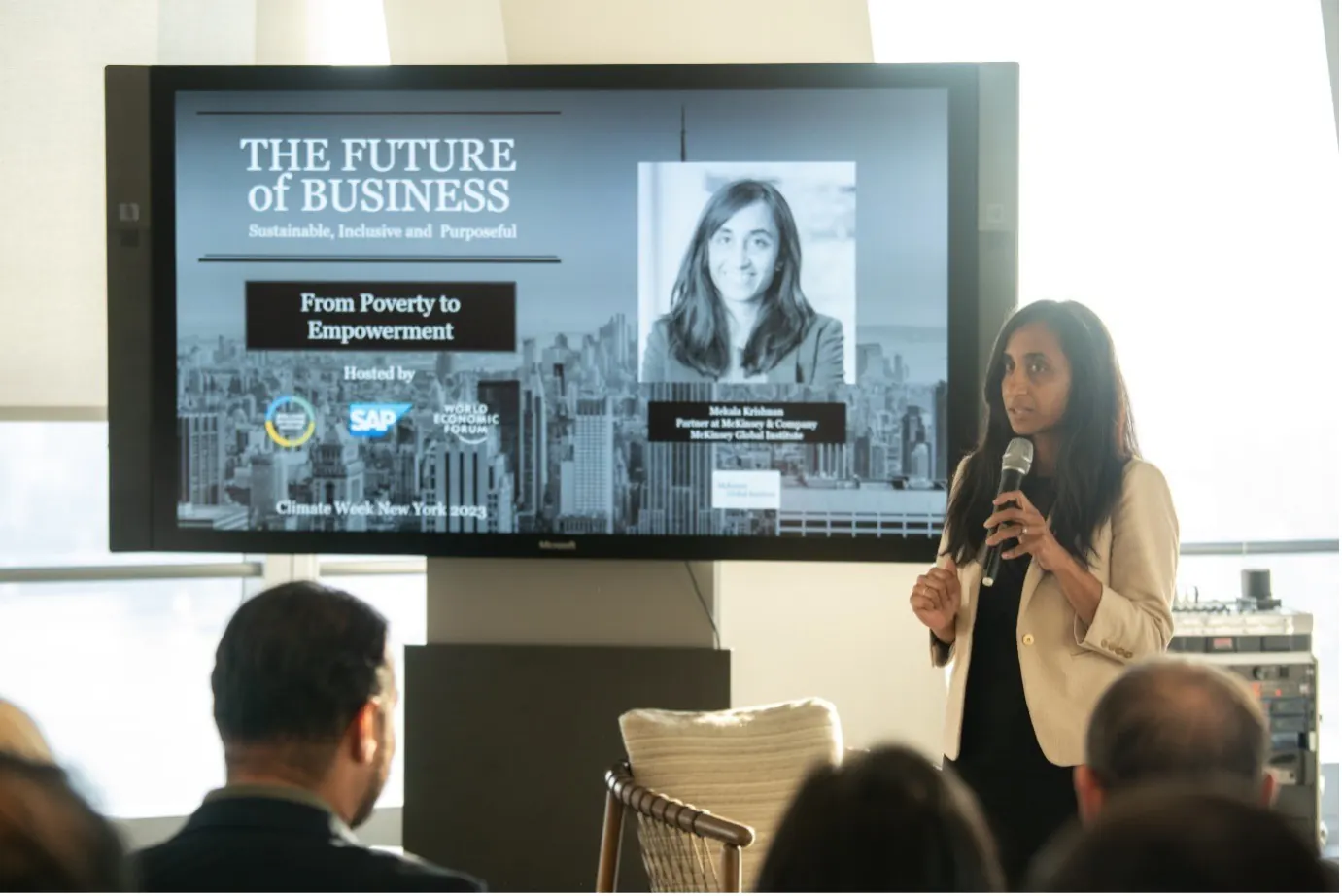
From Poverty to Empowerment
Keynote by Mekala Krishnan, Partner at McKinsey Global Institute
In her recent research, McKinsey Global Institute’s Mekala Krishnan delved into the critical question of how to elevate minimum living standards and achieve a net-zero trajectory within this decade.
“This is a decisive decade for both people and the planet, since 2030 is the target date for the Sustainable Development Goals (SDGs) and also approximately when the world’s carbon budget to limit warming to 1.5C at current rates of emissions is projected to run out,” stated Krishnan in her keynote at the Future of Business event where she underscored the key findings of her research, emphasizing the urgent need to address economic growth, inclusion, and sustainability as parts of a connected system. These goals are interdependent and cannot be tackled in isolation.
Krishnan’s study introduces a new benchmark, the empowerment line, which sits above the extreme poverty line of $2.15 per day. The empowerment line which starts at $12 per day represents the level at which people can afford essential needs like nutrition, housing, healthcare, and education, providing them with security, less risk of falling back into poverty, and the ability to realize their potential.
To elevate the 4.7 billion people currently below this line in developing countries to these minimum living standards, a cumulative boost of $37 trillion in spending power is required by 2030. At the same time, achieving a net-zero pathway necessitates an extra $41 trillion in low-emissions spending by 2030, compared to 2020 levels, totaling 8 percent of GDP annually until 2030.
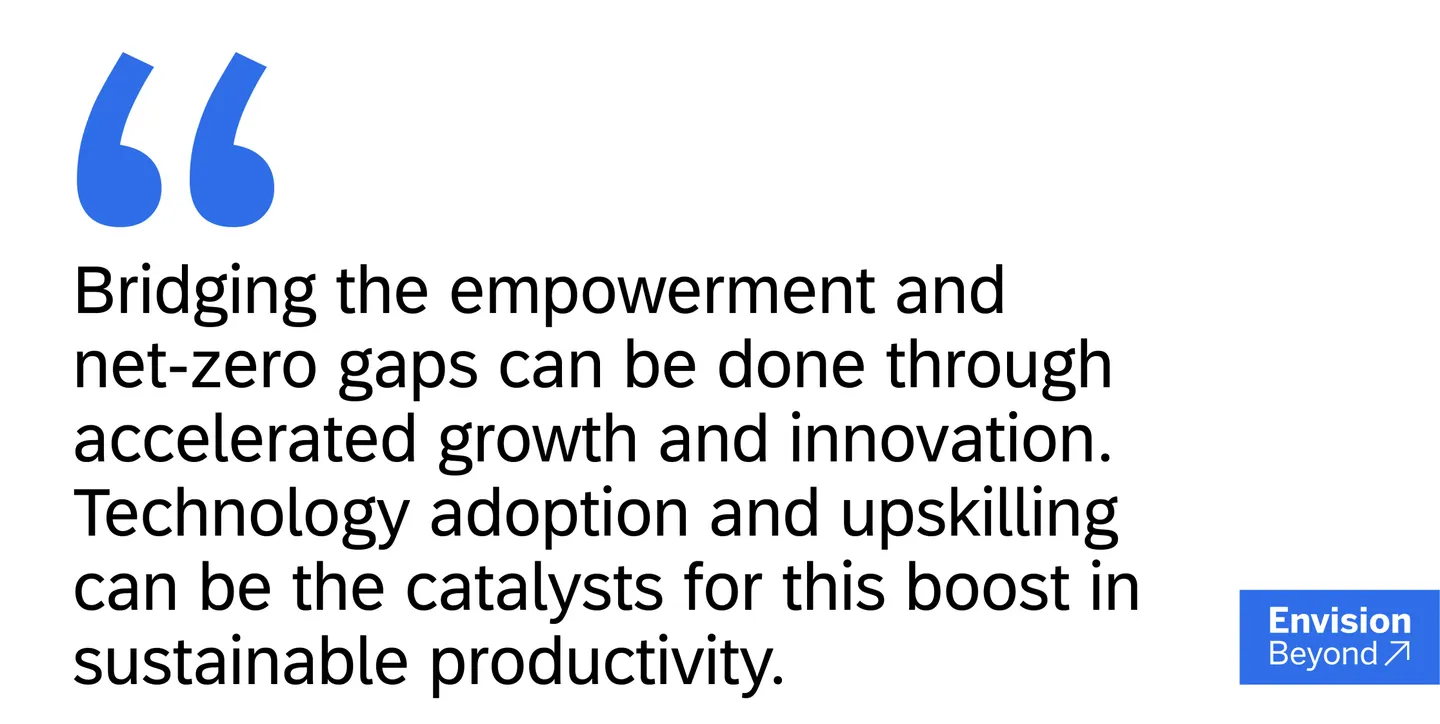
Approximately 65 percent of the empowerment gap and 40 percent of the net-zero gap could be filled through accelerated growth and innovation. The challenge lies in sustaining baseline growth and boosting productivity even further through technology adoption and upskilling.
Closing these gaps entirely would demand further societal commitments, which entail risks and tradeoffs. While many countries do not have the resources to get there in full on this aggressive timeline, accelerated growth and innovation could still lift about 2.1 billion people to full empowerment and 600 million out of poverty.
“Will you capture that opportunity?” was Krishnan’s question during the Climate Week New York 2023 discussion, challenging the audience to seize the leadership moment for businesses in advancing sustainable and inclusive growth.
Envision the Future: AI and Technology Disrupting Business
Panel discussion moderated by Jose Luis Carvalho, Co-founder & Co-head of the Intelligent Enterprise Institute, SAP; with Catherine Klinger, Executive Director, New Jersey Governor’s Office of Climate Action and the Green Economy, Rebecca Doherty, Partner at McKinsey & Company, and David Jonker, Head of SAP Insights
This discussion explored the profound impact of artificial intelligence, climate change, shifting demographics, and other transformative forces on the future of business, through three key areas of analysis: People, Enterprises, and the Community.
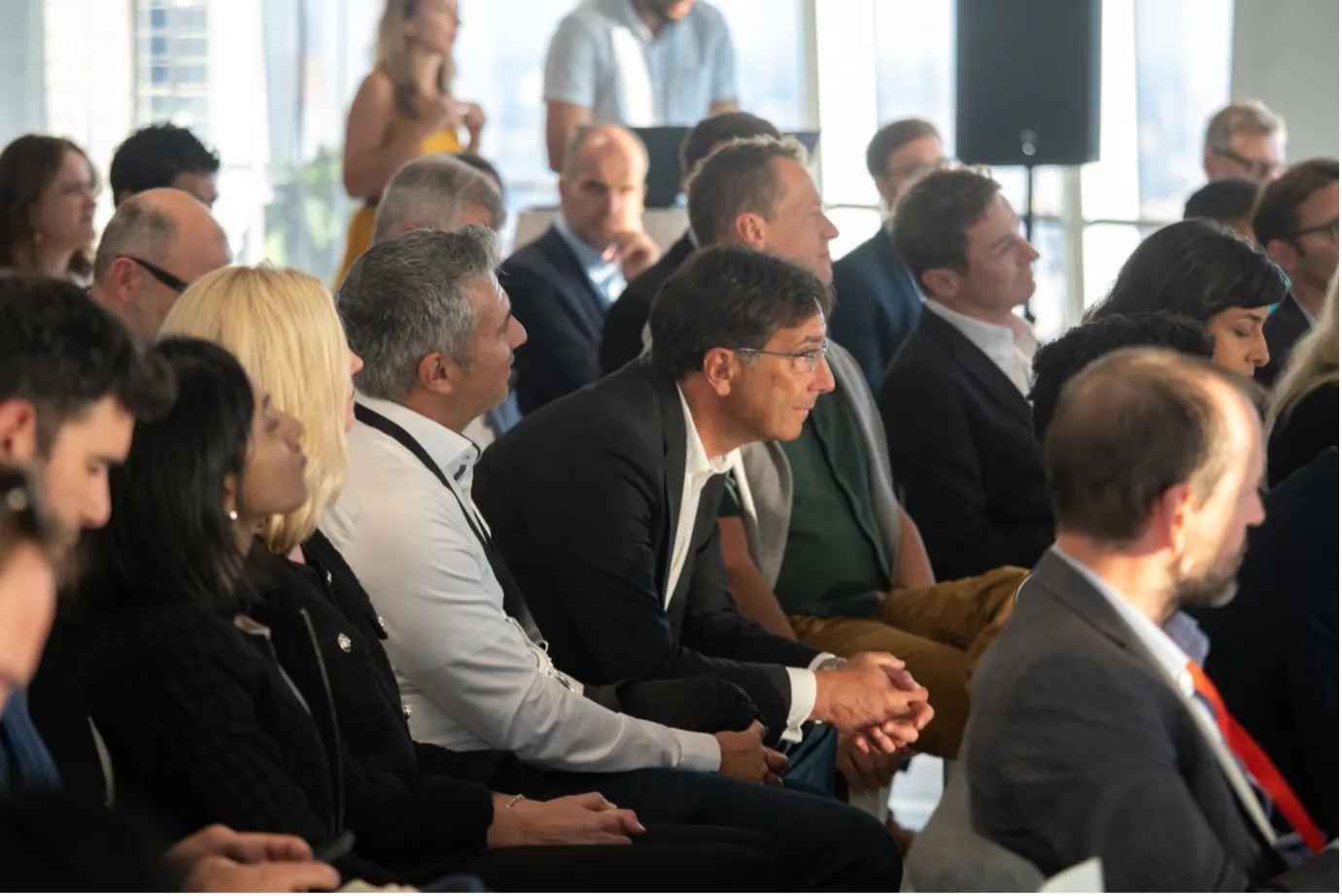
Peopleare adapting to a changing world; their life goals, ambitions, and the way they leverage technology are changing. David Jonker emphasized the evolving nature of what is considered a fulfilling life, saying,** “We are seeing a decrease in consumption, and a greater value being placed on quality, but it’s less conspicuous. There is a shift to quality and rarity of experiences; a desire to spend time in nature and in genuine relationships.”** He also noted that trust is becoming increasingly important, and the nature of relationships is shifting along with it. This highlights the shift businesses will need to make in their business models and in how they engage with customers.

Enterprises, too, are navigating transformation at an unprecedented pace. Rebecca Doherty underscored the urgency of change, stating,“Business models will need to shift to survive in the next 5 years.” She further noted,“Technology and AI will help take the day-to-day off, while humans will focus on the important and sustainable challenges for our evolution.” Businesses must swiftly adapt, leveraging AI and other technologies for excellence in both execution and strategic decision-making.

Communitiesare the pinpoint of collaborative evolution between people, enterprises and technology. Catherine Klinger highlighted AI’s role in sustainability, saying,** “As we think how companies are moving to greener technologies, the role of AI in the energy and sustainability space is all about integrating the future needs of our business community with future demands.”She also stressed the action being taken: “It is about preparing the children of today for the challenges of the future. Our climate standard includes cutting-edge technologies to build a generation of innovators.”** Businesses now engage in deeper collaboration with governments, driven by sustainability goals, and leverage advanced technologies to benefit future generations.
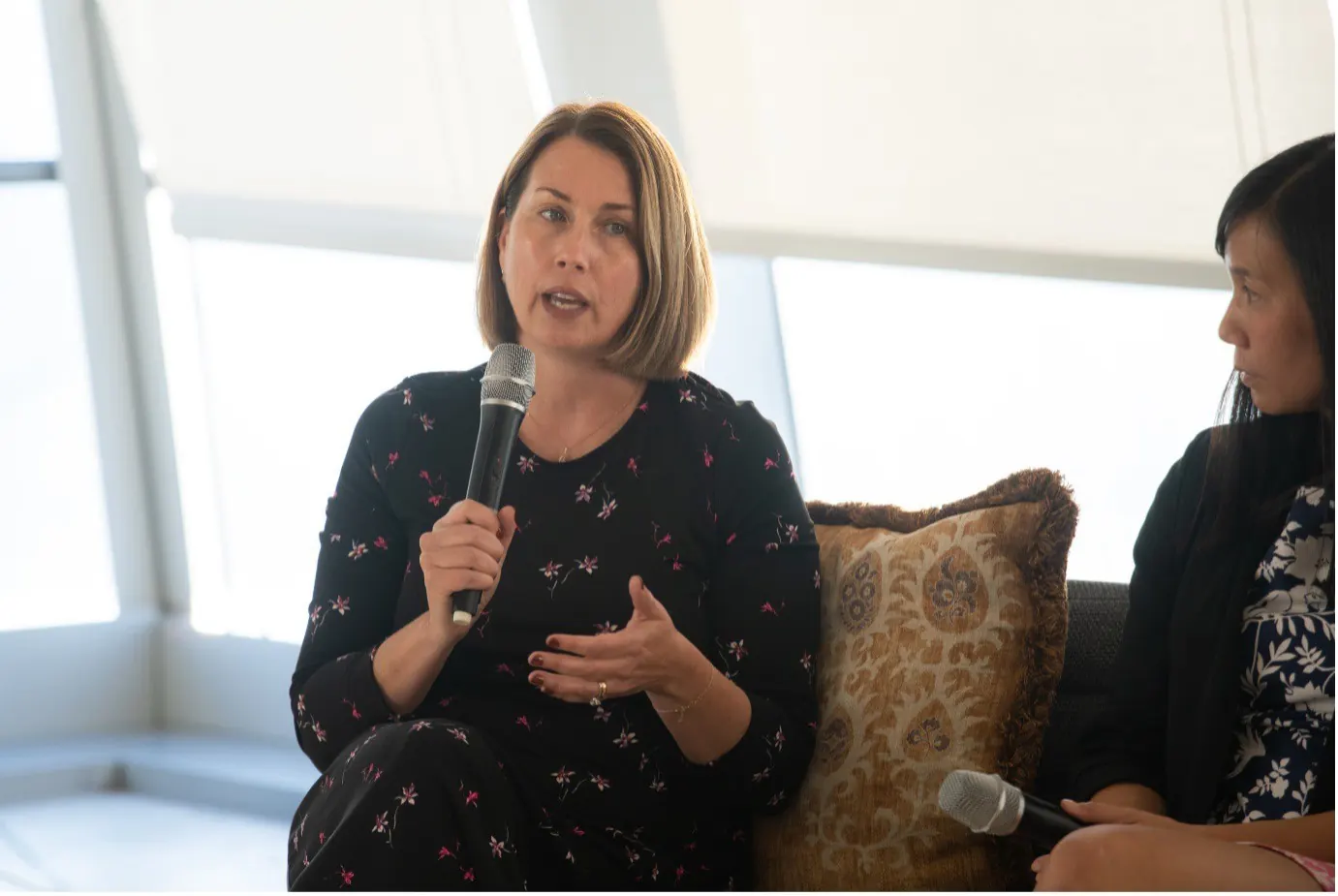
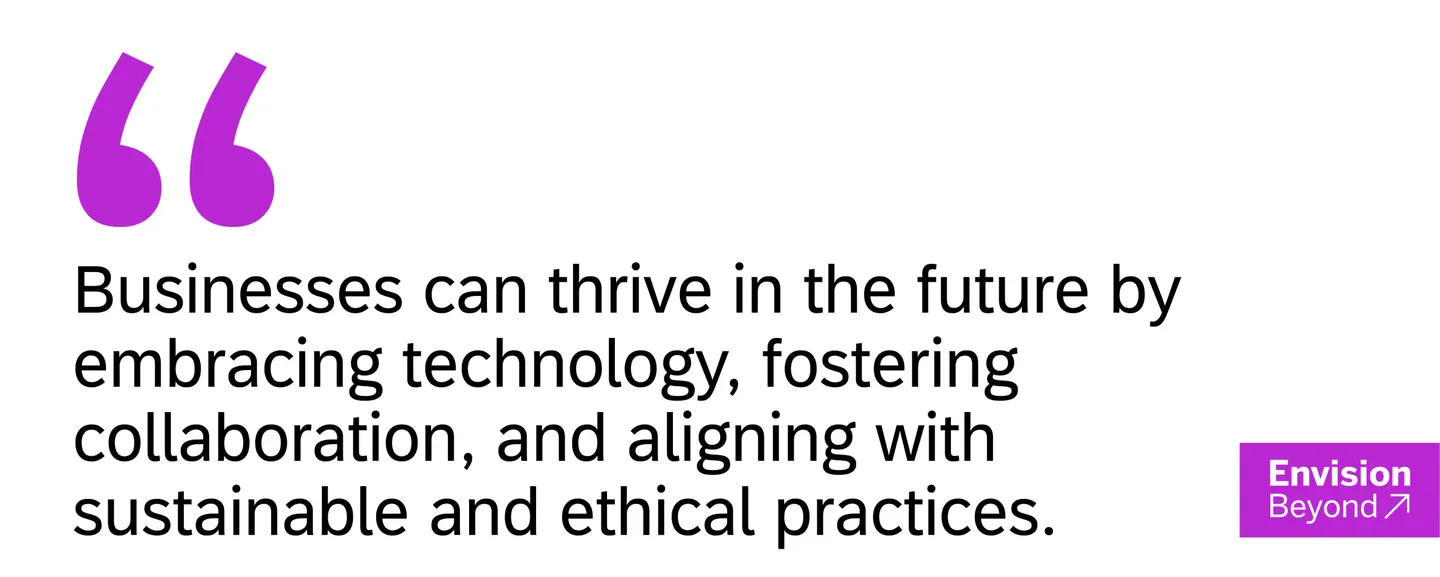
The panel envisions a future where businesses embrace change, together with their communities, through the usage of technology. Opportunities lie in harnessing AI, fostering collaboration, and aligning with sustainability and ethics. By recognizing these changes and proactively embracing them, businesses can chart a course toward a future that is innovative, sustainable, and collaborative. This transformative journey, guided by technology, shared values, and innovative thinking, positions businesses to thrive amidst global change and technological disruption.
Envision the Future: AI and Technology Disrupting World’s Hunger
Keynote by Bernhard Kowatsch,* Head of the Innovation Accelerator at the United Nations World Food Programme*
Imagine a world where the power of Artificial Intelligence (AI) is harnessed to solve some of the most pressing humanitarian issues.
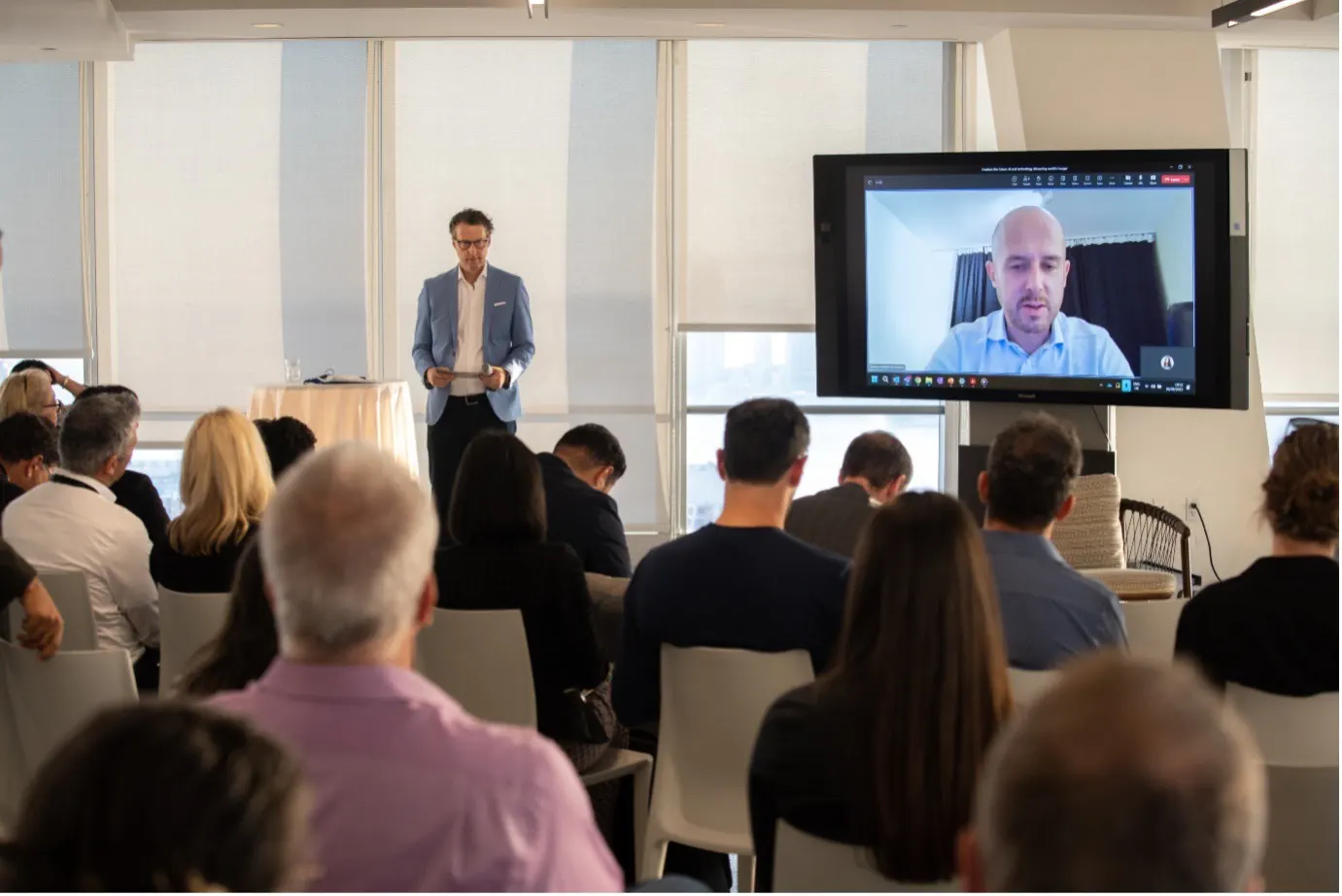
The United Nations World Food Programme (WFP), the world’s largest humanitarian organization operating in 120 countries and territories, has its own wing for technological experimentation and scaling – the Innovation Accelerator. “Let’s make use of technology. Why not start with simple things,”* *says Bernhard Kowatsch, Head of the Innovation Accelerator. Its mission is simple: find, support, and scale startups and technologies that can make emergency responses more efficient and end hunger sustainably.
“Ending world hunger is our goal, with stats unfortunately increasing in recent years despite our efforts. Wars, climate change and economic factors resulting in increased food and fuel prices are not making our mission an easier one. The need has never been higher,” stated Kowatsch in his keynote at the Future of Business event, citing that 345 million people face acute levels of food insecurity this year, more than double from 2020.
The SKAI project is a stellar example of how AI is being utilized for swift and precise disaster response. In collaboration with Google Research, SKAI employs satellite imagery and AI algorithms to detect building damage in densely populated zones of hunger and to identify required aid, all within 48 hours.
“Instead of taking two to three weeks of manual labor looking at satellite images, we now have the data much sooner, allowing a faster response and targeted attention to where is most needed,” remarked Kowatsch.
The Innovation Accelerator has touched 37 million lives and helped startups raise $200 million in grant funding, proving that big impact can start small. As the world grapples with an increasing number of challenges, from food insecurity to natural disasters, the Innovation Accelerator stands as a beacon of what’s possible when innovation serves humanity.
The conversation with Bernhard Kowatsch is not just a snapshot of the transformative potential of AI but a testament to what can be achieved when technology and empathy come together.
Build the Future, Together
Panel discussion moderated by Joseph Fowler*, Co-host of the Future of Business Event and Head of Arts & Culture at the World Economic Forum; with Johanna Zuleta, Cross-pollinator, Markus Reyman, Co-founder of TBA21 Academy, and Dr Max Frieder and Joel Bergner, Co-founders of *Artolution
One of the main objectives of the collaboration between SAP and Arts & Culture at the World Economic Forum is to provide a unique opportunity for leading voices of the cultural sector to connect and exchange with business leaders to foster a symbiotic relationship that promotes creativity, innovation, and social responsibility.
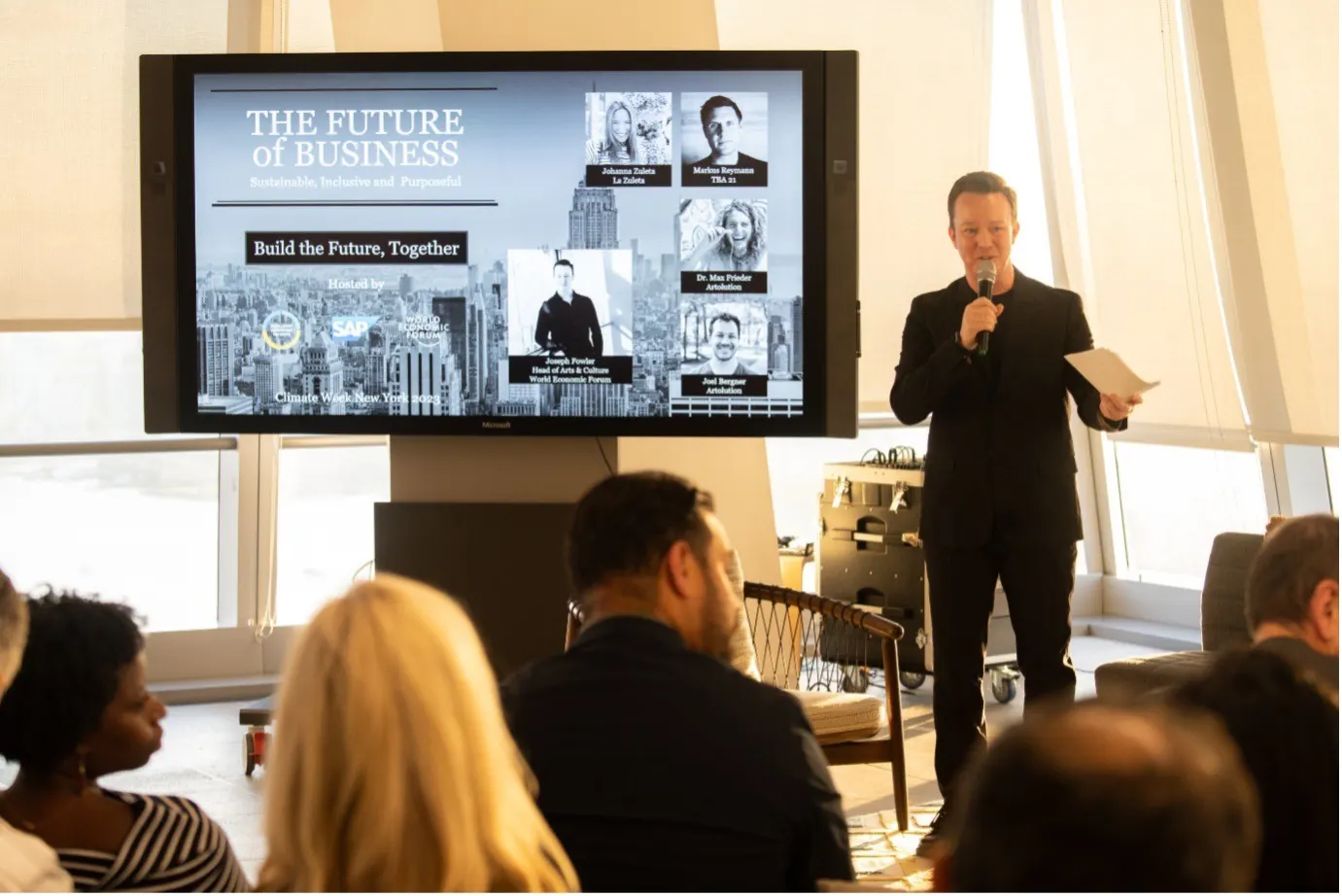
“Businesses must embrace the power of creative thinking around arts and culture to thrive in this new economy. From conventional thinking, businesses can explore innovative solutions and drive innovative success, tapping into a world of expertise and knowledge to enable a collective and intelligent prosperous future while embracing creativity and uncovering unconventional solutions,” said Joseph Fowler, Co-host of the Future of Business event and Head of Arts & Culture at the World Economic Forum during the Build the Future, Together panel.
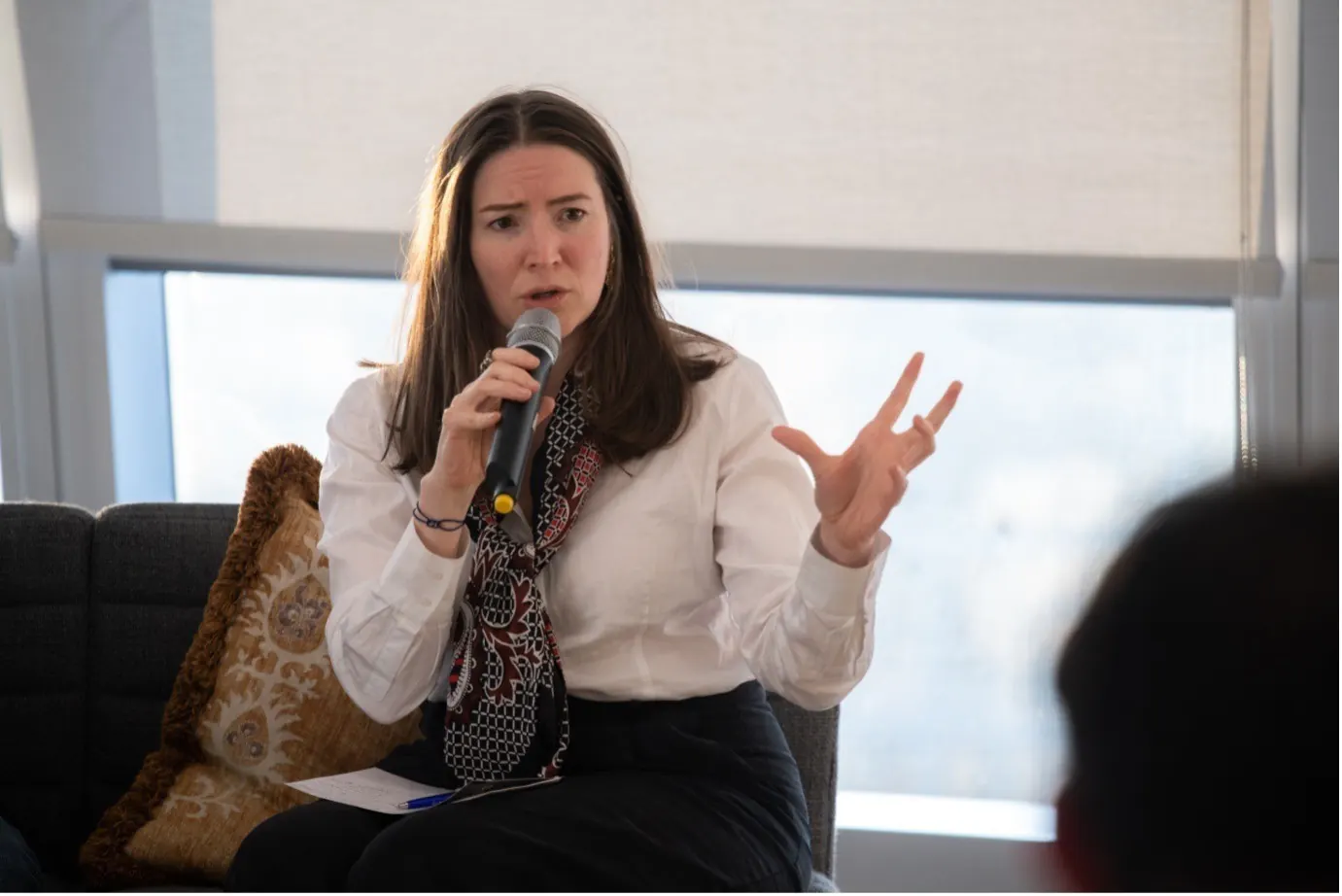
By bridging the gap between culture and business, and fostering a connection and network between the two, both sectors will benefit from shared knowledge, resources, and perspectives, ultimately leading to a more vibrant and prosperous society. “We should approach the intersection of business, arts, and culture with openness and less apprehensiveness. More dialogue between the two will help us solve the same issues we all face with climate change,” stated Johanna Zuleta, highlighting the importance of creating strategic connections between business, diplomacy, and cultural sectors to take the required steps toward solving the world’s common sustainability challenges.
Art plays a critical role by transcending boundaries and connecting people from diverse backgrounds. In the panel discussion, Dr Max Frieder and Joel Bergner explained how Artolution’s* *mission leads to tangible and sustainable actions that are changing lives in many different countries. “We must amplify the voices of the people who do not make it to the forefront to create meaning in the world. Attracting businesses and organizations by amplifying such unprivileged voices will change the trajectory of history,”* *noted Dr Max Frieder.
Joel Bergner further added: “Arts and culture, independent from the format, impacts the lives of people positively facilitating sustainable programs for local communities around the world, elevating local artists and their mission so they can become their own ambassadors and inspiration for change.”
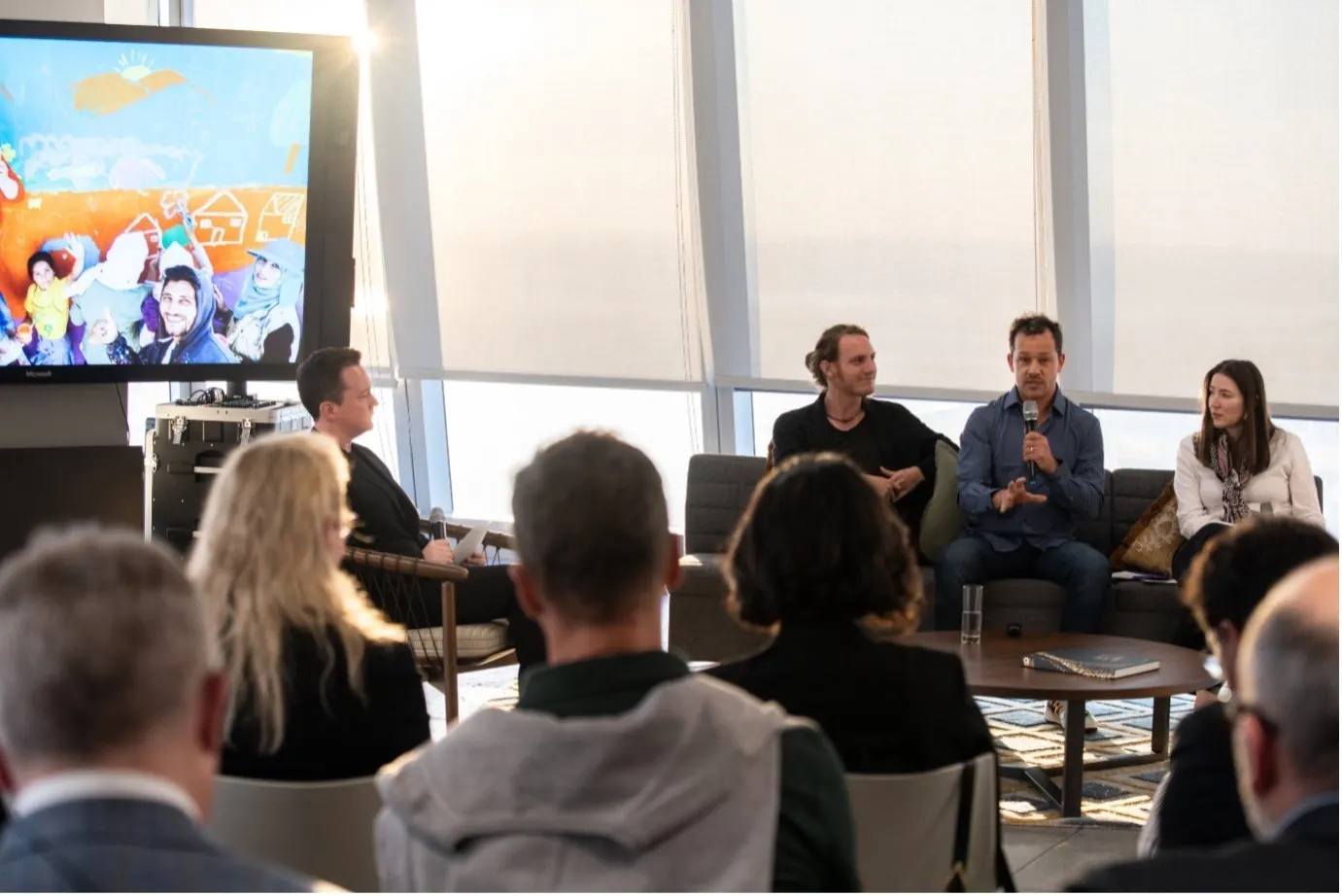
In an era where the interconnectedness of social and environmental challenges demands innovative solutions, the profound impact of the arts emerges as a potent catalyst for transformative change. Markus Reyman articulated that this is exemplified by the TBA21 Academy’s mission, stating: “Our mission with the academy is to bring people together to dissolve the boundaries, think and do at the same time, moving from being just an arts organization to enabling a visionary and constant transformational process that welcomes different perspectives in a productive and safe space, born from the arts and culture sector.”
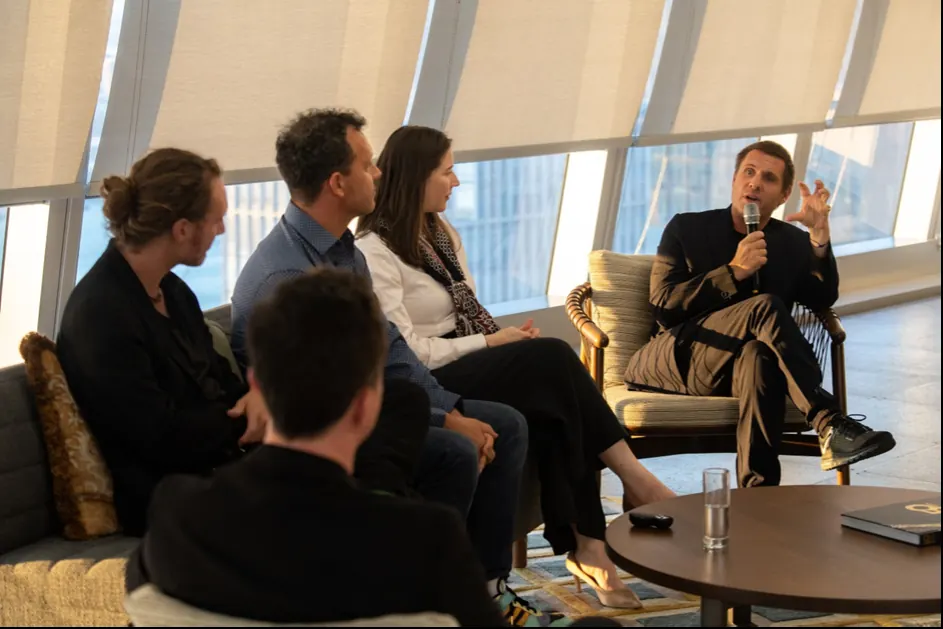
The panel discussion underscored that cultural leaders provide creative, intellectual, and emotional insights into society at large, and when these insights are intertwined with business strategies, the combination of the two makes for exciting and impactful partnerships in the current complex world. “That is what we aim to achieve with this incredible partnership we are forging with SAP,”stated Joseph Fowler, “to create impactful partnerships that will be fruitful for all stakeholders and lead to tangible positive outcomes.”
Experience the Future
Keynote by Sophia Mendelsohn, Chief Sustainability and Commercial Officer and co-GM for SAP Sustainability and* Gunther Rothermel,** Chief Product Officer and Co-General Manager for SAP Sustainability*
The challenges of sustainability touch every aspect of our lives as they are interconnected and have far-reaching consequences that transcend borders and boundaries. Sophia Mendelsohn and Gunther Rothermel shared insights on addressing their complex and interdependent nature and ensuring a more secure and prosperous future for all.
Sophia Mendelsohn highlighted significant challenges our customers are facing on their sustainability journeys, stating: “Our customers need to adapt to evolving ESG regulations and market pressures while urgently pursuing net-zero and other commitments.” The current carbon measurement methods rely on outdated tools and inaccurate data, hindering comprehensive progress tracking. This spend-based approach offers insights but falls short in monitoring ongoing improvements and long-term goals. She noted that there's a pressing need to transition to activity-based approaches for real-time emissions tracking, improved process understanding, and sustained progress toward long-term sustainability goals.
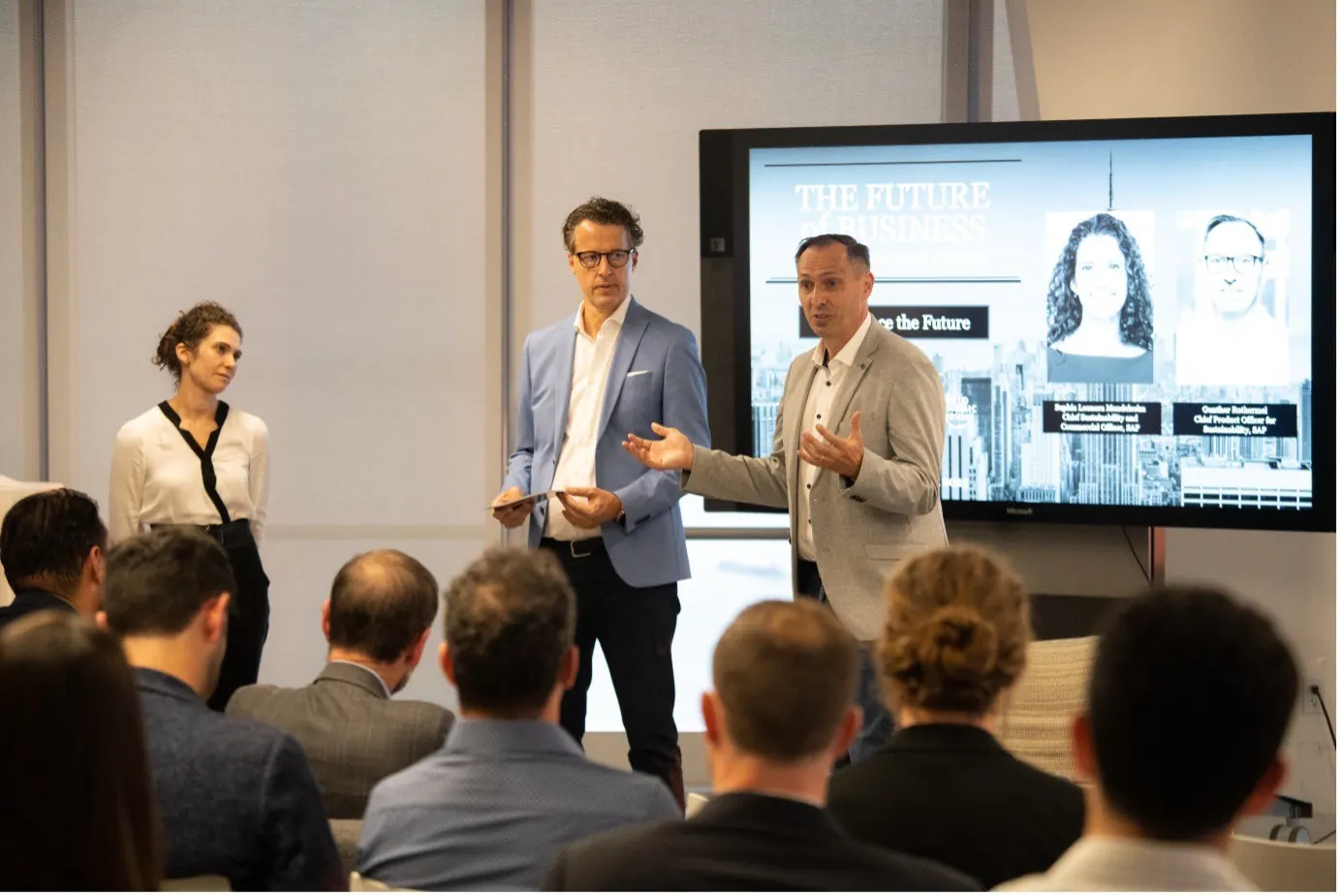
Mendelsohn underscored that SAP’s approach to help customers solving ESG challenges and advancing sustainability focuses on simplifying processes for their customers to have more impactful sustainability initiatives. This includes revolutionizing carbon management to empower businesses with data-driven insights and seamless integration into daily operations.
“Behind the sustainability challenges of our customers, there is data. We must treat carbon and water, just to mention a few examples, as important entities so we can truly manage and solve our climate issues,” continued Gunther Rothermel, explaining what it means from an engineering perspective. SAP aims to lead in the “green ledger” space by offering precise sustainability solutions, including transactional carbon accounting. Rothermel stressed that sustainability is a transformation journey, not a simple on/off switch, with potential benefits that include improved company positioning, financial insights, and innovation.
Food for Thought
Read here the research from McKinsey Global Institute’s Mekala Krishnanto explore how to elevate from poverty to empowerment** within this decade**.
Watch here the CNN interview where Bernhard Kowatschdiscusses the transformative work happening at the** Innovation Acceleratorof the United Nations World Food Programme.**
Arthas the power to** help communities in crisis**. Explore here fromJoseph Fowler, Head of Arts & Culture at theWorld Economic Forumto learn how.
SAP Insights looks into the pivotal role of sustainability in business successexploring its impact on** competitivenessand profitability**.